

I still remember my first hit… It was in Amsterdam, I had just turned 22 and was technically on a work trip. Do you remember yours? You just can’t beat the feeling of the first time. What a rush… It was mid-morning; I had just landed. I hadn’t even made it to the hotel! I knew it would probably happen that week, but I didn’t expect it to happen right as I arrived. I peered down at the notification on my phone from a light-headed daze, and the high kicked in.
💸You’ve been paid! 💸
Conventional Wisdom
In those early months and years, it was just harmless fun. I partook in moderation, enjoyed a modest hit alongside everyone else, and didn’t let it change my lifestyle. Balance.
But the peer pressure was so strong. Everyone, from family members to strangers, encouraged me to increase my intake. At work and in my social life, I was surrounded by people taking bigger and bigger hits and boasting about it. The coolest kids were the ones who consumed the most, and who wants to be left behind?
I know this game well by now. Who has the biggest member, who can lift the most weights, who can drink the most beer. And now: who makes the most money. Put me in, coach; I’m ready.

I stepped up my game and worked harder. I learned how to navigate the organisations that dealt the goods and worked my way into bigger doses. They valued commitment, so I prioritised whatever they asked for, and it worked. The company had these special nicknames for people based on how much they were on, silly terms like “Associate” or “Consultant”, and I worked my way up those ranks. “Partners” were the biggest users; complete dependents, they had to stay on the substance for life. The alternative was a lethal withdrawal that brought with it the Devil’s Ds (in no particular order): Downsizing, Divorce, Depression.
I made it to the second-to-last level, the one just before Partner, but things were changing. By then, I had found love, moved cities, discovered “spirituality” (read: psychedelics), all of which led me to take a sobering look at my life. Objectively, it was excellent. I worked steady hours, with people I generally liked, and was paid far more than I should have been. But subjectively, internally, there was so much agitation. I developed this compulsion in the mornings: the first thing I wanted to do was hop on my laptop and clear my inbox. I just couldn’t relax unless my inbox had zero emails in it. On good days, that just meant delaying my shower by five minutes. On most days, it meant jolting out of a trance two hours later when my wife would softly place a piece of toast next to my laptop. Even though I knew those emails could wait and that everything was objectively fine, I still felt so stressed. I tried to combat the impulse by joining my wife for morning walks to the bakery before logging on. Objectively, those mornings were lovely. Subjectively, I was anxiously watching the minutes go by until I could finally clear the decks. But the peace of mind I associated with an empty inbox never came; by the time the inbox was empty, something else would’ve come up. And on and on it went. All day, all week, all year. But not, I decided, all my life.
It was time to get clean. I quit my job.
New-Age Wisdom
Ever a man of extremes, I decided I needed to cut out all forms of income. I would live a humble life, surviving on only the bare minimum. And through this simplicity and self-denial, I would finally find this elusive peace of mind.
You may recognise this story from the tale of Buddha, who left his prince-hood and luxurious palace to scrounge in the streets in the search for enlightenment. My journey differed only marginally: instead of abasing myself to the ranks of homelessness, I took some cash from the big piggy bank I had built up and bought myself tickets to Brazil. There, I lounged in a few premium Airbnbs on my way to a picturesque, untouched organic farm on the edges of the rainforest where I would volunteer my labour for zero money. My only payment would come in the form of satisfaction for giving back (as well as food and a bed in a hut with big glass windows overlooking the valley). Aside from the fact that I was well fed and housed in a room that would, a few weeks later, serve as the lodging for people attending a yoga & wellness retreat, it was a true exercise in selflessness.
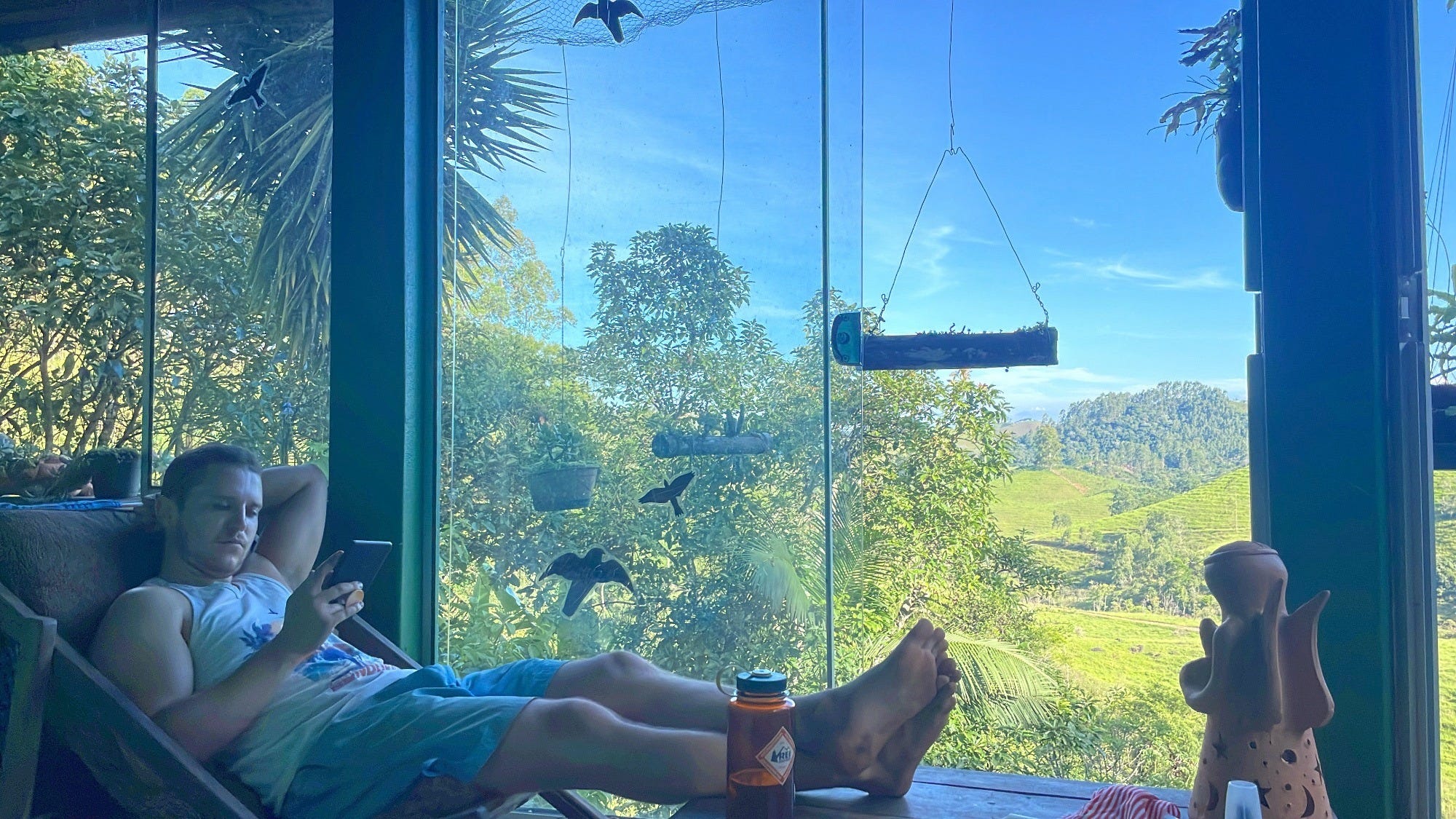
In addition to the arduous four-hour days of manual labour, which included picking flowers and collecting organic veggies for our vegan lunch (and demanded at least one nap to recover from), I further opened my soul by reading spiritual texts and, of course, practising yoga. I followed the well-trodden path deep into the forest to experience chemically-induced ego-death, and emerged far too wise to remain attached to material goods.
And then, my friends, I began to run out of money.
So I took my elevated conscience back to my home in Europe. Returning to work in my previous career was unthinkable: an affront to the sacrifices and lessons I had acquired through my journey in the wild. But living on the streets… well, that didn’t appeal either. So I did what any upstanding gentleman would do: I encouraged my wife to get a job. But not any job, a high-paying job. And that she did. And thus, I remained free to pursue my true calling, unshackled by the material constraints that limit the mental scope of so many poor souls.
The Pure Path
Alas, despite the yoga and psychedelics and half-hearted attempts at establishing a meditation practice, I still knew not what that true calling was. What I did know was that, whatever it would be, its rewards wouldn’t come in the form of money. That grubby substance that so warps the heart. No, I’d leave the earning to my wife, while I pursued an occupation with pure intentions and pure rewards.
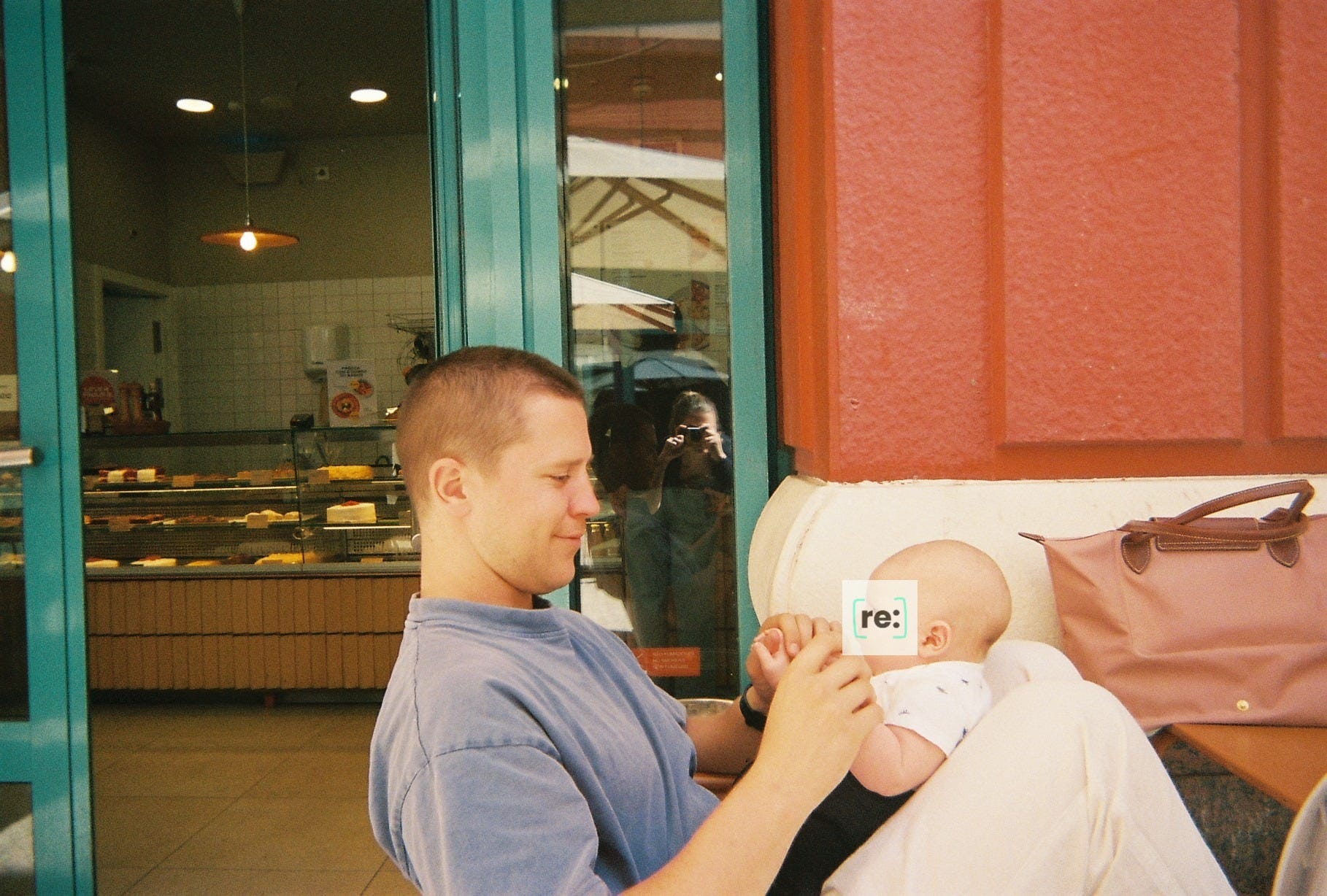
Perhaps child-rearing? Worth a shot. And thus came my first-born son. Parenting is certainly deeply fulfilling and all-consuming. But still, I felt I was destined for more.
Perhaps writing? Also worth a shot. And thus came this Substack you are reading (if you are still reading). Thus also came two half-written, half-baked, self-indulgent books, whose publication I will generously spare the world. And still, I felt I was destined for more.
Perhaps I needed to get back out there, to be part of something bigger, to join an organisation? So I began coaching little kids in the art of colliding into each other at high speeds without dropping a ball (a sport known as rugby). And I did so pro bono! It felt nice to give back. Until one of the kids mocked me for stumbling over my words, and they all laughed at me. Why did I sign up for this?
These three activities occupied my time and my mind for some months, and I thought I had found a stable situation. One with just enough work and just enough satisfaction to appease my free and wild soul.
But then the kid started day care. And just like that, I found myself with nothing to do all day. What to do with all this newfound time? Thankfully, I have friends who are comfortable sharing hard truths. That truth?
I needed a job.
Not a part-time, volunteering position which I could dip out of whenever I felt like it. Not a feel-good, “do it for the kids” type of role where the reward comes in warm fuzzy feelings.
I needed a real job: a job that pays.
But what of my high-minded moralistic preachings on the dangers of working for money? On the addictive nature of ever-increasing earnings? On the hedonic treadmill that traps so many, whose lifestyle improves in lockstep with their pay rises, trapping them into a never-ending chase for higher income?
Fittingly, the journey that started with an intention to humble myself had finally humbled me. I was wrong. I have acquired a newfound respect for pay.
Not Moderation: Balance
Two years of dilettantism have led me to the shrewd analysis that paid work differs from unpaid work in three critical ways.
First, the agreement to exchange limited resources for labour creates a formal commitment beyond voluntary arrangements. If pay follows the work, its promise acts as an incentive to work beyond the point of personal gratification and satisfaction. If it precedes the work, it creates a feeling of indebtedness along with a strong desire to earn what was given.
Secondly, pay is a critical form of recognition at the personal, organisational and societal level. Societally and organisationally, pay is distributed in proportion to importance (at least, that’s how it’s supposed to be, though somehow “essential workers” seem to be the worst paid). Pay is a signal that you are valued, and that feeds into internal feelings of self-worth and self-esteem. It is no coincidence that people with the most inflated salaries tend to have the most inflated egos.
Thirdly, at least for those without a high-earning wife, it’s essential for survival.
And so, I am converted. It is important to be paid for your work. I want to be paid for my work.
But none of this invalidates my caution around money. Money still retains a uniquely seductive, addictive quality that can distort our motivations and turn idealistic people, originally driven by a mission, into transactional operators driven by personal profit. Like with all drugs, when it becomes an end in and of itself, you are in dangerous territory. If money is the main, or worse, the sole, reason you are working in a given field or organisation, it is time to reconsider your professional choices.
Money is just one component of a healthy motivational diet. For work to be fulfilling and sustainable, it must be supported by more than financial goals. It must satisfy our fundamental desires to be challenged, to be surrounded by stimulating people, and to achieve an impact.
This isn’t an appeal to moderation: it’s an appeal to balance. Do as many drugs as you want, and get as much money as you can. With regard to drugs, don’t let them ruin all your friendships and scupper your life plans. With regard to money, don’t let it distract you from doing what truly makes you happy.
Did I find my true calling? I don’t think there is such a thing. But I got those ungrateful kids at rugby to start paying for my transportation. And I’ve taken on a job with an organisation regenerating the landscape (but pay is… pending). I haven’t figured everything out quite yet, but one thing is certain: I don’t wake up with that anxiety any more. Though still searching for my calling, I have found more peace of mind.
i read it all and i don't believe in true callings either!
Love this article!! Made me chuckle along the way♥️