

“I want to say, in all seriousness, that a great deal of harm is being done in the modern world by belief in the virtuousness of work, and that the road to happiness and prosperity lies in an organized diminution of work.” — Bertrand Russell, In Praise of Idleness.
I
AI is taking my work.
My eyes ache after nearly a dozen uninterrupted hours staring at a screen’s glare. Empty coffee cups of all sizes (filter in the morning, cappuccino at lunch, the late-afternoon espresso) have piled up next to me. The office lights have turned off because I’m the last one on my floor. I get up to activate the motion sensors, so they come back on.
That deck is looking sleek, though. Years of consulting experience have taught me the craft of slide design. Every page has a clear message, supported by data, analysis, and insight. Intense, sometimes tedious hours of interviews, workshops, and number crunching led to this. I email my project partner to review it. I’m exhausted and slightly anxious to get feedback, given how much has gone into this. I close my laptop and call it a day.
AI now does all that work in minutes.
That’s a ton of effort saved.
The part of me who believes in the virtue of work, however, feels uneasy about this. I tweak those slides even when they look good because it feels like something, all those years honing those skills, is being taken from me.
I conclude that those slides still need a lot of fixing. Hallucinations and clumsy imperfections everywhere. I’d bet I could spot an AI slide from miles away, and the proud slide creator in me feels mildly insulted when I do.
At the current rate of progress, however, that won’t be the case for much longer. I remind myself that this is a good thing, adapt, and do my work with these new tools as best I can. Yet I find my emotions—a mix of relief and resentment—confusing.
What will it do to my job? And what will it do to yours?
II
One perspective is that technology has always been a part of human experience. We are homo technicus, living in symbiosis with machines. Technology makes work more productive, which leads to higher incomes, which leads to more demand for shiny new stuff and new services, which requires someone to produce these, so we get new jobs. Of course, some outdated jobs will disappear in the process. In recent history alone, with the advent of computers and the internet, many jobs have disappeared. No more video rental clerks or photo lab technicians, but hey, now we have influencers!
Another, gloomier perspective is that AI differs from any prior technology shift because it will soon outsmart us (look, the thing codes itself now); it can be applied across a very wide array of tasks; and it can act quasi of its own accord. A job market that rewards knowledge above much else is in serious jeopardy if super-intelligent machines run the show without supervision. Not even the influencers are safe. Already, we see fake AI influencers amassing tons of followers on social media. Save the influencers!
But neither perspective questions the role jobs play in our lives.
III
What’s so bad about a machine taking your job?
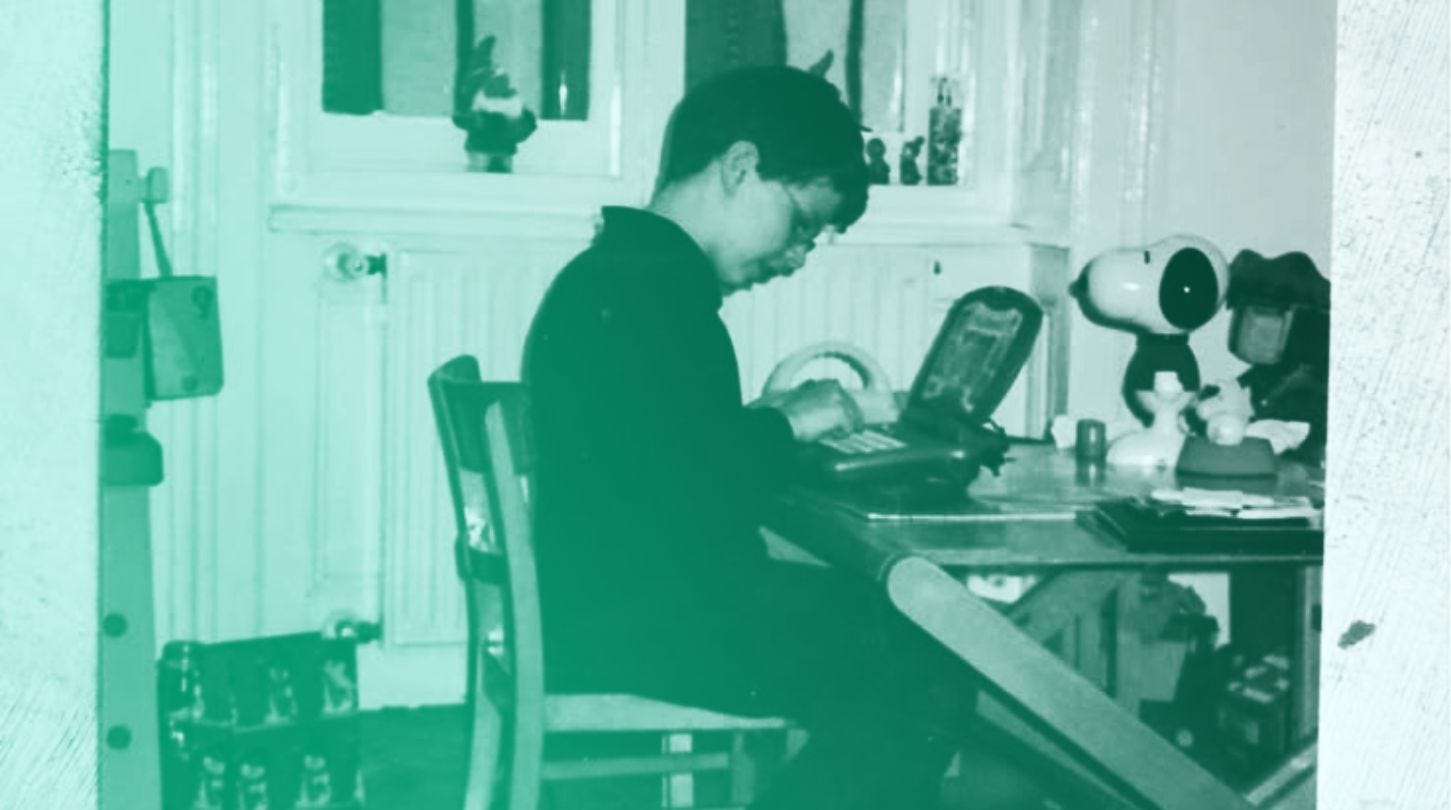
As a child, I loved to play office. I picked up on what I saw as the essence of a job: structure, identity, and status.
The fireman wears a helmet and acts heroically to save others. The CEO wears a suit, types on his laptop, and makes the important decisions. The clothes I wear and the role I play were my idea of a job. A job was like a character, and it was fun to play one.
In a way, that wasn’t too far from reality. A big part of what I enjoy about my real job today is that it gives me structure, identity, and status. The ritual of sitting in a meeting, wearing a dress shirt, and introducing myself as a consultant is a big part of the appeal.
The tradeoff is that I get less time to define my identity outside of a job. What I do defines me, and if I could, I’d spend more time reading and writing, for example (and maybe I’d finally become half-decent at it). I’d spend more time cooking, or skiing, or on the jiu-jitsu mats, or with my friends and family.
If I lost my job, I’d miss the work itself, or at least parts of it. I enjoy doing something well and collaborating with my team. But I also recognise that work for work’s sake misses the point. Work is about realising an outcome, producing a good or a service that benefits others. Some of that requires grunt work, unpleasant administrative tasks, and other monotony. If AI can do it more efficiently, especially the not-so-fun parts, then it should do that work.
Don’t find reassurance in the hope that AI will create new jobs or fear it will take them away; embrace the possibility of working less instead.
The problem, of course, is money. That’s where the anxiety about AI and jobs is coming from. I am not deeply afraid of working less, but I am afraid of getting paid less. If a machine suddenly does most of our work, then why pay us for it?
There’s a temptation to fill newfound free time with arbitrary work to appear busy and useful. That’s an equally rational and wasteful response. If we all act this way, we revert to kids pretending. We play office.
Solving the issue of income distribution in an AI-dominated future will take some growing up. I won’t solve for it here. Instead, I’ll be back at my desk, looking at slides that are already good and trying, for once, to leave them alone.
I strongly believe a job cannot define a person. Unfortunately, if it is something we spend a lot of time doing, it feels like all we are is that job (been there), but the truth is, we are not.
One of my biggest aims while working was to optimise myself and everything around me to finish the task in the least time possible so I could have more free time. I've done research for years, which is not a regular 9–5 job. It can very easily become a 24/7 job, so one has to draw the line on when to stop. So, I would define goals (or have them defined for me) and I'd do my best to attain them, so I could have more free time. I have done very different jobs since then, and I've realised my goal never changed. Because there is a lot beyond "a job" that I love investing my time in, even if I love the job I am doing.
The way I think about it: if AI is going to give us more free time, why not enjoy that to pursue the things we've always wanted to try? If we get paid less for what was our primary source of income but have free time, we can also find a way of designing an income from something else we enjoy doing. We will have more time to create, which I feel is what humans are designed to do. More time for ourselves, more time to simply enjoy being human.
AI is a tool. Let tools do whatever repetitive, not-so-interesting tasks we previously had to do, and let us enjoy the extra free time we get from that. Whatever skills and knowledge we learnt before will stay with us, but we should focus on this new, maybe challenging and scary, opportunity — the chance to have more time to find ourselves. Because no matter how much AI evolves, "being human" — with intuition, creativity, emotional intelligence, the ability to feel deeply and to look for connection — I don't think that will ever be replaced by AI.
And in my humble opinion that no one asked for, hahah, I think that is something worth being excited for.
Amazing article!